
Spell Cultivator
Definition
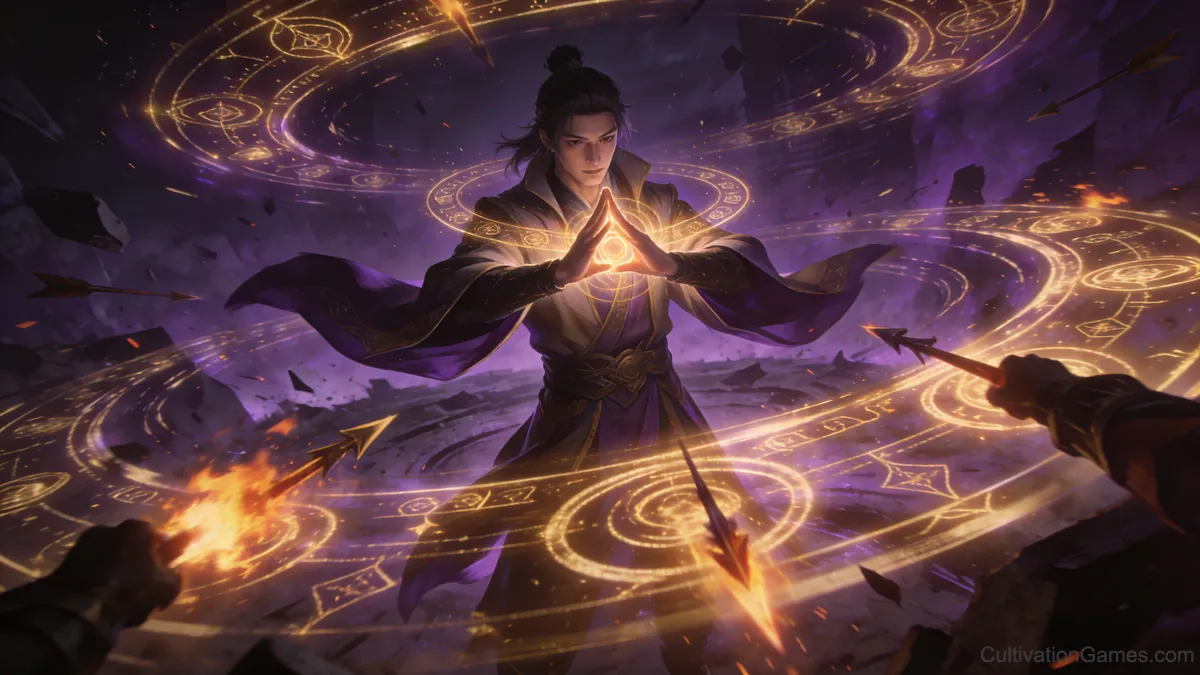
Spell Cultivators harness elemental laws and Qi manipulation to unleash powerful ranged techniques. They dominate the battlefield through area control, elemental reactions, and high magical damage. While devastating at range, spell cultivators are heavily dependent on preparation, positioning, and resource management.
Note: For entertainment only. Fictional mechanics—Do not attempt in real life.
Strengths & Weaknesses
| Aspect | Strengths | Weaknesses |
|---|---|---|
| Damage | Massive AoE and burst potential | Extremely fragile |
| Range | Long-range dominance | Vulnerable in close combat |
| Control | Strong crowd control | High resource consumption |
| Complexity | Deep build variety | High execution difficulty |
Gameplay Considerations (With Examples)
In Tale of Immortal and Warm Snow, spell cultivators often dominate screens with elemental explosions—but only if enemies never reach them. Mana management, cooldown timing, and positioning are critical.
Done right, stacking elemental damage, mana regeneration, and cast speed allows you to clear entire arenas safely.
Done wrong—standing still or neglecting defensive tools—results in instant deaths once a fast enemy breaks through your spell range.
Among all cultivation paths, Spell Cultivation is the most misunderstood—and the most brutally honest.
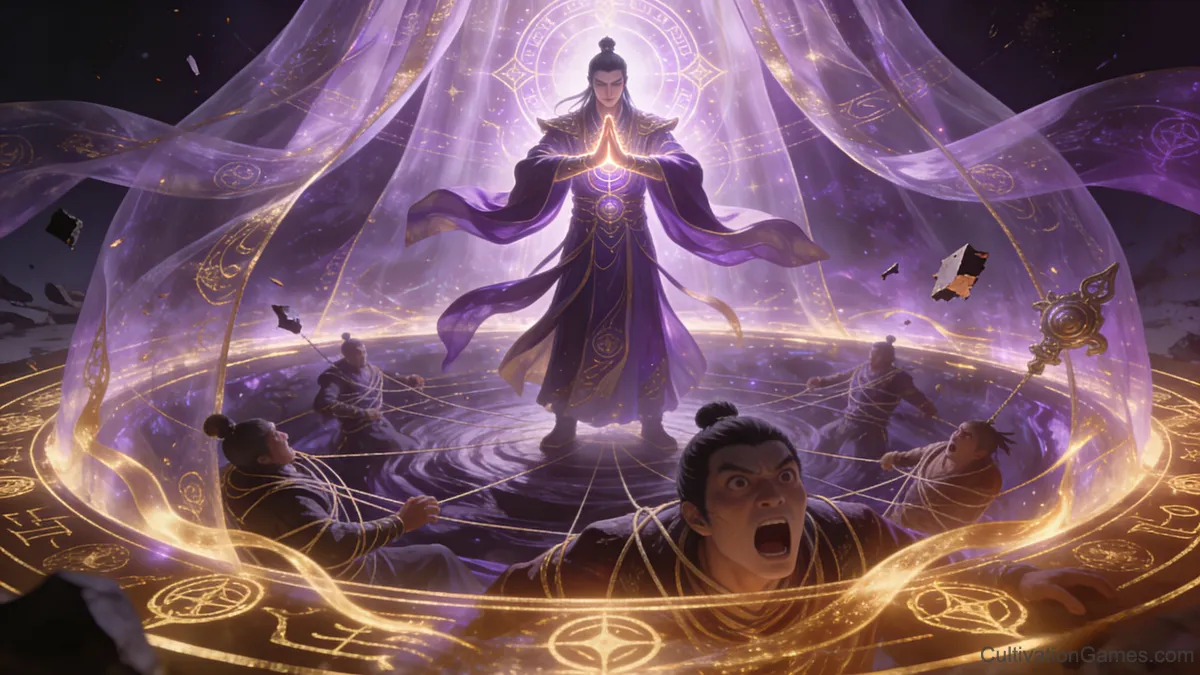
On paper, it looks perfect. Massive AoE, long-range safety, battlefield control, and the ability to decide fights before enemies even get close. In practice, Spell Cultivators are either gods of the battlefield or corpses waiting for a cooldown. There is very little in between.
This duality is consistently reflected across novels, games, and live-action adaptations.
The most concerning questions you have
Quickly providing clear answers for you to get started fast.
Is Spell Cultivator good for beginners?
No. Spell Cultivator is usually not beginner-friendly because it relies on resource management, positioning, and timing rather than simple attack patterns.
Is Spell Cultivator strong in casual gameplay?
Yes, but only with proper setup. Spell Cultivators can be very strong in casual gameplay if players understand basic spell rotations and resource usage.
What is the playstyle of a Spell Cultivator?
Spell Cultivators focus on ranged damage, area control, and elemental or law-based abilities. Their playstyle rewards planning, positioning, and efficient spell usage.
Is Spell Cultivator overpowered?
Spell Cultivator is rarely overpowered. Its power comes from preparation and scaling rather than raw stats, making it strong in skilled hands but weak if misplayed.
Is Spell Cultivator viable in late game?
Yes. Spell Cultivators are often among the strongest late-game builds due to powerful scaling, area damage, and law synergies.
Is Spell Cultivator good for solo play?
Yes, but it requires careful play. Spell Cultivators can handle solo content effectively if players manage distance, cooldowns, and resources properly.
What makes Spell Cultivator different from other cultivators?
Spell Cultivators rely on spells, elements, and laws rather than weapons or physical strength, trading survivability for high burst damage and battlefield control.
Do Spell Cultivators require heavy grinding?
Yes, to some extent. Spell Cultivators often need more resources, skill unlocks, or setup compared to weapon-based or body-focused cultivators.
The Cognitive Ceiling: Why Spell Cultivators Are Hard to Master
| Feature | Spell Cultivator | Sword Cultivator | Body Cultivator |
|---|---|---|---|
| Win Condition | Preparation & Sequencing | Reflexes & Timing | Endurance & Attrition |
| Worst Counter | Silence & Interrupts | Hard Crowd Control | Armor Penetration |
| Late-Game Evolution | Law Manipulation | Perfect I-Frame Chains | Damage Reflection |
Spell Cultivation doesn’t reward fast hands.
It rewards players who think one step ahead—and punish those who don’t.
What “Spell Cultivation” Actually Means Across Media
In most xianxia-inspired systems, Spell Cultivation is not simply “using magic.” It is the path of law manipulation, formation logic, and resource conversion.
In Games
Tale of Immortal: Spell builds revolve around cooldown cycling, Spirit Root synergy, and terrain control. Poor positioning is instantly fatal.
Amazing Cultivation Simulator: Spell Cultivators rely heavily on Qi purity, formation support, and artifact amplification. A single mismanaged breakthrough can permanently cripple casting efficiency.
Justice Online : Spell-type classes dominate large-scale PvP but collapse instantly when isolated.
In Novels
I Shall Seal the Heavens: Meng Hao’s early spellcasting phases show how fragile a law-based cultivator is before domain mastery.
A Will Eternal: Spirit-enhancing pills and talismans are mandatory for sustained spell output.
Renegade Immortal: Wang Lin’s spell phase emphasizes preparation over reaction—fights are often decided before they start.
In TV / Animation
Battle Through the Heavens: Alchemist-flavored spell users consistently rely on pre-cast formations and flame control rather than raw durability.
Stellar Transformations: Domain-type spellcasters dominate space-scale combat but struggle in close-quarters ambushes.
Across all media, the pattern is the same:
Spell Cultivators win with preparation, not reflexes.
Core Playstyle: Winning Before the Fight Starts
Unlike Sword or Blade paths, Spell Cultivation is not about mechanical execution—it is about decision density.
A Spell Cultivator is constantly asking:
Where will the enemy be in 3 seconds?
Which law interaction will cascade?
Can this fight be ended without entering melee range?
This is why Spell Cultivators feel overpowered in structured encounters but underwhelming in chaotic ones.
In Tale of Immortal, high-tier spell builds trivialize boss arenas with terrain-locking skills.
In contrast, random elite ambushes frequently result in instant death.
The class is not weak—it is context-dependent.
Stat Reality Check: What Actually Matters
New players often stack raw spell damage. Veterans know that damage is rarely the limiting factor.
Priority Stats That Actually Scale
Cooldown Reduction: The true lifeline. A Spell Cultivator without skills is just a fragile Mortal.
Qi Recovery / Mana Regeneration: Sustained casting matters more than burst.
Cast Speed: Especially critical in systems where casting can be interrupted.
Control Duration: Freeze, Bind, Suppression—these are not “utility,” they are survival tools.
Spell Penetration / Law Penetration: Essential against high-realm enemies with innate resistance.
In Amazing Cultivation Simulator, even perfect spells fail if Qi throughput cannot support them.
In Justice Online, control resistance on enemies directly determines whether a spell build is viable in PvP.
The Biggest Noob Traps
Trap #1: Ignoring Defensive Layers
Spell Cultivators do not survive through armor or HP. They survive through distance, control, and sequencing.
A single mobility skill or emergency displacement often matters more than 20% extra damage.
Trap #2: Over-specializing Too Early
Many novels romanticize “one ultimate spell.” In actual systems, this is a death sentence.
Cooldowns get punished
Resistances scale
Boss phases invalidate single-damage types
Hybrid control + damage spell kits consistently outperform pure nukers.
Trap #3: Treating Spell Cultivation as Low-Skill
This is the most common misconception.
Spell Cultivation has a low mechanical floor but an extremely high cognitive ceiling. You are managing resources, positioning, cooldowns, enemy behavior, and terrain simultaneously.
Late-Game Reality: Why Spell Cultivators Either Dominate or Disappear
At Soul Formation and above, Spell Cultivators face a hard truth:
Enemies no longer die to raw numbers.
This is where Domains, Laws, and Environmental Control become mandatory.
In Renegade Immortal, Wang Lin’s dominance comes not from spell count, but from law compression.
In Tale of Immortal, endgame spell builds succeed only when skills chain into permanent suppression loops.
If a Spell Cultivator fails to transition into law-level control, they fall off faster than any other path.
Who Should Actually Play a Spell Cultivator?
Spell Cultivation is best suited for players and readers who:
Enjoy planning over reaction
Prefer control over durability
Accept high punishment for mistakes
Like systems where preparation is rewarded more than reflexes
If Sword Cultivators dance on the edge, and Body Cultivators endure the storm,
Spell Cultivators rewrite the weather.
Elemental Law Synergies: Why Single-Element Builds Eventually Fail
If you’ve ever wondered why your damage suddenly feels useless in the late game, this is probably why.
In high-level play—especially in systems like Amazing Cultivation Simulator and Tale of Immortal—sticking to a single element stops working. Resistance scaling quietly eats your damage until your “ultimate spell” feels like a visual effect instead of a threat.
Veteran Spell Cultivators don’t think in elements. They think in reaction loops.
Water + Fire: The Steam-Burst Loop
This combo is a classic for a reason. Applying a Wet or Saturated state with Water laws first, then compressing Fire laws on top of it, creates an evaporation-style burst that bypasses a chunk of flat defense. In practice, this is one of the few ways spell damage stays relevant against high-defense enemies without relying on pure penetration stacking.
Water + Lightning: The Conductivity Chain
Lightning spells look great on paper and miss constantly in real fights. The fix is Water terrain control. Flood the field first, then cast Lightning. Suddenly accuracy stops being a problem, and chains start jumping exactly where you want them. In Tale of Immortal, this turns chaotic fights into predictable cleanup.
Wood + Earth: Overgrowth Entrapment
This one doesn’t look flashy, but it wins wars. Earth laws restrict movement—gravity wells, slow fields, terrain deformation. Once enemies can’t disengage, Wood-based life-drain effects stack far beyond what they normally should. Bosses don’t burst you; they just quietly lose the attrition battle.
Technical Stat Priority: Tuning a Real Spellcaster
If your build collapses during the Soul Formation transition, it’s usually not because of damage—it’s because your casting rhythm breaks.
Late-game spellcasting is about decision density, not raw numbers.
Law Penetration
Mandatory. Endgame enemies routinely sit at extreme elemental resistance. Without penetration, your strongest spells barely register.
Spirit / Qi Throughput
This isn’t just a mana pool. It’s how much power you can push per second. Low throughput causes skill stutter—missed casts, delayed reactions, and failed chains in high-pressure fights.
Cast Interruption Resistance
Anyone who’s played large-scale PvP in Justice Online learns this the hard way. A three-second ultimate that gets canceled halfway through is worse than not casting at all.
Area of Effect Radius
This matters more than people admit. Terrain control only works if enemies can’t dash out of it in a single frame. Bigger zones mean fewer mistakes.
FAQ: How Veteran Players Escape Spellcaster Death Loops
Q: I keep running out of Spirit mid-fight in Amazing Cultivation Simulator.
You’re probably casting above what your Qi purity supports. Muddy Qi quietly doubles costs while cutting output. Before tough fights, check Spirit Root harmony. Clean Qi matters more than bigger spells.
Q: How do I deal with Sword Cultivators in PvP? They close the gap instantly.
Don’t target them—target where they’re going. Sword builds rely on straight-line momentum. Pre-cast zones force a choice: eat the damage or lose tempo. Either way, you regain control.
Q: Which Law is best for solo progression?
Wood and Earth. Wood sustains long sessions without downtime. Earth prevents mob swarms from collapsing on you while cooldowns reset.
Q: Is Spell Cultivation always a glass cannon path?
Only if you build it that way. Many late-game setups convert damage into Spirit drain using mana shields or spatial distortion effects. You’re not tanky—but you’re not fragile either.
Related Categories
- Explore more in "Cultivation Path" VIEW ALL